|
|||||||||||
|
|||||||||||
|
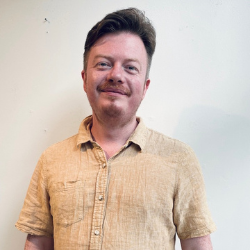
When the worlds of the amateur and the professional musician coincide, most find common ground. Apart from a very small number of cynics, whose raison d'ĂȘtre appears to be an impish castigation of music at all levels, amateurs and professionals alike have an almost innate desire to make music, and each feeds off the other's experiences and values. Walter Reiter is one such musician. Many acknowledge his position at the top of the period-instrument ladder, but few know of his involvement with a small, dedicated team of amateur period-instrumentalists. Reiter's early endeavours in music making were hardly what one might call conventional. He was born in England but at an early age moved with his family to a small village on the Atlantic coast of Northern Ireland, where, until the age of ten, he recalls hearing mostly Irish folk music. Despite the fact that his mother, who was intensely musical, did not play an instrument, she still managed to teach both Walter and his older brother the violin. 'She never had the chance to learn; both her brother and sisters had lessons but there was never enough money left over for her tuition. However, she had heard both her brothers and her sisters practising and so taught us Suzuki-style.' On the family's return to England, Walter attended the Junior Royal Academy of Music where he studied with Professor Molly Mack. Like many musical twelve year olds, he wanted to be a conductor and showed this interest to his teacher. 'She said, "fine, but what will you tell the strings when they won't do what you want?" I understood what she was saying, however. When I was sixteen, Professor Mack wanted me to go to the Academy, but my parents were apprehensive, thinking that a university education was a better gateway to a career.' But after enrolling at the University of Glasgow, he found the academic side uninteresting. Preferring to play, he left to continue his studies at the Royal Scottish Academy, and later, the Guildhall School of Music and Drama. There, his interest in period instrument playing started to develop through the lessons he had with Thurston Dart, although Philip Pickett's efforts to persuade him to play the rebec failed, since he still preferred Tchaikowsky. 'From the Guildhall, I went to Tel Aviv University where I stayed for three years. There, I studied with Ramy Shevelov, who was both a fabulous musician and teacher and who encouraged his pupils to think for themselves. His influence was great and I immediately fell under the spell of Romantic and contemporary repertoire.'
After his time as a student at Tel Aviv, Walter became a member of the teaching faculties of the Jerusalem Conservatory and the Academy of Music of the Hebrew University. Despite becoming increasingly interested in Baroque music, he found that teaching was also becoming important to him. 'I absolutely love teaching the violin; I had some remarkably talented students and, for me, it was a fantastic way of making music. I learned through others and that was incredibly rewarding.' Ultimately, however, his interest in Baroque music became so great that he took a sabbatical in France to find out more. He had already received several lessons on the Baroque violin, but admits to having learned most of his techniques from playing in orchestras, such as Les Arts Florissants with William Christie. He hadn't abandoned his interest in modern playing however, and, on deciding not to return to Israel, settled in Paris playing both Baroque and contemporary music. 'I worked with several early and contemporary music groups since they were both areas where there was plenty of activity. I even spent time playing at a cabaret in the Pigalle, which paid for a lot of studies!' |
|||||||||||
|
Problems? Comments? Suggestions? Contact Us.
Site coded by passive. Copyright © Bridgewater Multimedia 2001. |
|||||||||||