MUSICTEACHERS.CO.UK VOLUME 2 ISSUE 6, DECEMBER 2000  
Online Journal
CAREER PROFILE:
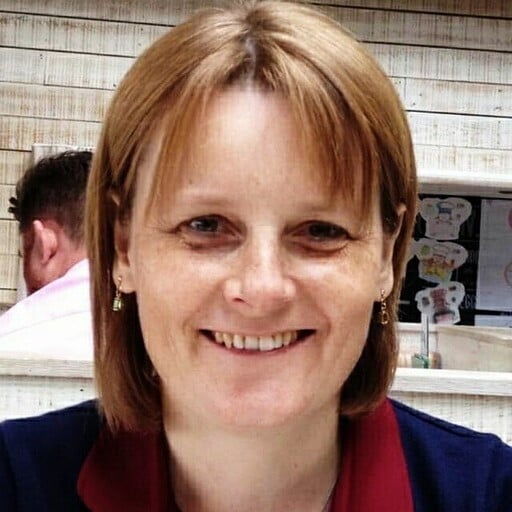
Claire Willis

Claire Willis talks of her work as Press Officer to one of the largest recording organisations, Universal Classics, which incorporates the Deutsche Grammophon, Philips and Decca labels.
  What were your earliest experiences of music?
  I'm not sure that I can remember! My family has always had an eclectic mix of music on vinyl, tape and CD that ranged from Abba to Zemlinsky. My parents bought a piano when I was about five and I started to experiment by playing tunes by ear - the resulting cacophony is probably what persuaded my mother to invest in piano lessons! Fortunately, she had a very patient friend willing to take me on at such an early age!

  Did you sing or learn an instrument?
  I learned piano first, and although I enjoyed playing Beatles tunes etc., I was not a great natural. I took my first piano exam at the Kenya Conservatoire of Music, but this was not an auspicious start since I only scraped a pass! However, at the age of eleven, I started having clarinet lessons, which I really took to, despite the fact that I really wanted to learn the 'cello. As my parents were living overseas and I was at boarding school, I needed to learn something portable and the clarinet was the only woodwind instrument on which I could make a noise. So that was it! In particular, I loved playing in ensembles - for example, I joined the school orchestra as soon as I could play three notes and asked the others to teach me as much as they could. I also learned the violin from age fourteen, which was fantastic. Despite being too much of a late starter to achieve much technical facility, it gave me extra opportunities to play orchestral repertoire in the local Youth Orchestra when there were too many clarinettists!

  Who influenced your musical development and how?
  First, my mother, who is not musical, for providing the opportunity to study the piano; however, I took my first regular instrumental lessons at school, so that was extremely influential in my development. My first clarinet teacher was very encouraging and, although I picked up some bad habits, enabled me to learn very fast. Following Grade 8 at the age of fourteen, I started with a new teacher who did some much-needed technical instruction.
Then I had lessons with John Sharp from the Northamptonshire County Music School. He was a fantastic teacher who really understood what learning an instrument takes and coached me for auditions for music colleges. The Northants Music School was very, very important: school music was of a good standard, but things really took off when I joined the Northants County Youth Wind Band under their conductor John Greaves. WOW! He was such an inspiration to us all - we recently had a reunion of those years and plenty of the band are still playing. It was a great social and musical experience.

  Had you planned a career in music? What were your musical aspirations?
  I wanted to be a lawyer until halfway through the lower sixth at school. Then I suddenly realised how much of my life I was devoting to playing and that was it! Music college auditions were extremely daunting, but I got through. That was, of course, a great moment because the hard work had all paid off. But that is just the beginning if you want to play professionally!

  What lead to your current work with Universal Classics?
  I enjoyed all of my studies at the Royal Academy of Music, but, being conscious that I lacked that steely determination as a player, I took every opportunity to gain other experiences. For example, I took a Saturday teaching job at Camden Saturday Music School, worked for an agent during a summer break, was an ABO volunteer, did part-time work with the Academy of St Martin in the Fields' Orchestra and managed a film-session orchestra. After I left the Academy, I studied Historical Musicology at King's College, London as a post-graduate while teaching part-time, but soon realised that my skills lay outside the world of academia! I applied for a job as PR assistant to Dvora Lewis, one of the best in the business, and learned the 'trade'. I also spent six months as the Education Manager for the London Symphony Orchestra, which gave me invaluable project-management experience.

  What are the challenges facing you in your career?
  To sustain the enthusiasm and ideas!
To promote classical music and artists, particularly in the non-specialist media.
To keep up-to-date with the increasing proliferation of the media (traditional and 'new')
To find enough time to keep listening to great recordings.

  How do you feel that the classical recording has changed over recent years?
  I am a relative newcomer to the industry - but my understanding is that it has to be commercially viable, which is why there are now resources devoted to recordings that will appeal to a variety of music buyers. There is still dedication and appreciation of the great artists, but this has to be in context of commercial necessities. So-called 'crossover' projects are absolutely vital for survival.

  How do you see the future of the classical recording industry? Do you think that the Internet will play a significant part?
  In a word, yes! However, there are two major challenges regarding the safeguard of copyright and the prevention of piracy. The Internet has huge possibilities for retail of classical music (on CD or other downloadable formats) and for the wider promotion of artists (streaming of concerts, exclusive interviews, etc.) Classical record buyers are quick on the uptake of the opportunities - it makes sense to order specialist classical CDs direct. It is just this kind of specialised field where the Net offers such a huge advantage: the availability of related information is also a big bonus for classical music - particularly with links to information on concert performances. Online exploitations of back catalogue recordings will continue as a vital resource, with stores (and, at some stage, individuals on home PCs) able to download and burn their own CDs.

  What advice do you have for anyone wishing to pursue a similar career?
  There are so many opportunities in the arts - my advice would always be to look at the kinds of jobs people are recruiting for (make it a habit to scan the appointments' pages) and take opportunities for work experience. Pick up as many office/IT skills as you can. Also, never sell yourself short - musicians are (I think) extremely adaptable and quick at picking up new ideas - they are also very good self-starters/learners. There are many routes in and a number of marketing and sales people in this business come from music retail environments. As for press, the key is to be keen to make contacts, chase opportunities and have a voracious appetite for reading newspapers and magazines! It is also important to have imagination, patience, an eye for detail and good communication skills, since they are key requirements for both the press and the artists.
Finally, I have come across some individuals who say ' it's such a terrible shame that you don't play anymore…with all that talent, training gone to waste'. What rubbish! I learned so much that I still put to use every day. No one bats an eyelid if a history graduate becomes a management consultant, so what's the difference? A final word - be realistic about salary expectations and working hours! If you want to earn big bucks in the City, then go and work in the City!

  Universal Classics have been associated with many superb recordings. Which are your personal favourites?
  There are too many to record here, but in brief: as a student, I spent all my savings on the Solti Ring Cycle on Decca, which is still the gold standard? Karl Böhm's Tristan and Isolde on Philips; Alfred Brendel playing Beethoven's Piano Concertos with Simon Rattle - a great collaboration; Julius Katchen playing Rachmaninov, one of our 'Great Pianists' recordings; Jessye Norman singing Strauss's Four Last Songs on Philips; Pollini playing Diabelli Variations on DG; Boulez conducting the Chicago Symphony Orchestra in Strauss's Also Sprach Zarathustra, (a big sound) on DG! Also, Strauss's Alpine Symphony with Karajan and the Berlin Philharmonic Orchestra - a classic!; Bach's St Matthew Passion with John Eliot Gardiner on Archiv and Malcolm Bilson playing Mozart Sonatas nos. 20 and 21, also on Archiv.


Problems? Comments? Suggestions? Contact Us.
Site coded by passive.
Copyright © Bridgewater Multimedia 2001.