|
CAREER PROFILE
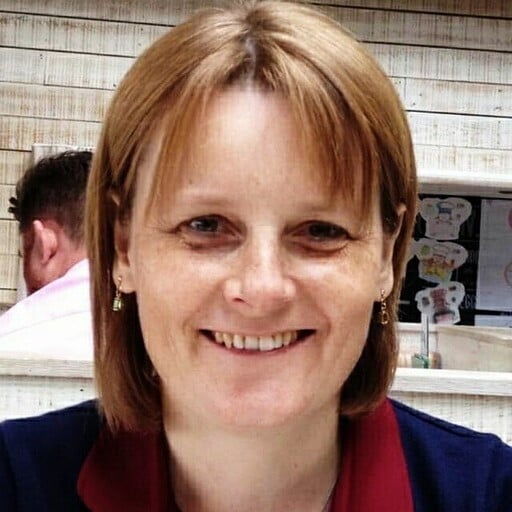
Anwen Lewis
Like many musicians, there is more to Anwen Lewis than meets the eye.
Although a freelance composer and coordinator for the School of Composition and
Contemporary Music at the Royal Northern College of
Music, she has the somewhat odd job title of Music Animateur, developing
external education projects between the college and the community at
large.
|
|
 |
|
Where and when did
your musical interests begin? |
 |
|
Although the piano was
the first instrument I learned, which I took up at the age of five, my first
experience as a composer was when I was eight. Whilst pretending to practise
the piano, which I still can’t play, I started to compose a little tune; I
wrote it down and took it to my teacher who said ‘that’s interesting’,
since it wasn’t strictly tonal. However, I liked it and that was that! The next
important event was when I was taking my GCSEs – I was in the first year to do
the new exams, for which we had to write a proper composition. Because I played
in the Hampshire Youth Orchestra, I wrote an orchestral work, which I took to
my teacher who, I have to admit, was gob-smacked; others were taking along
single melodic lines, but somehow I produced a fully-orchestrated piece. But I
do remember my teacher being horrified that I had written a clarinet line that
was in seconds with the flutes…until we both realised that I had written the
part out transposed! She was extremely apologetic. In fact, realising her
mistake, she came back the following week with a box of chocolates for me. |
 |
|
Who influenced you and
why? |
 |
|
Absolutely nobody! All
the music I listened to was, and still is, important. But I could never say
that there was one specific composer who I had to listen to; there are things
that we can all learn from any piece of music. |
 |
|
What do you think shaped your
musical tastes? |
 |
|
Well…I’m still shaping them now, but
I think it was as a result of whatever I was doing practically at the time. You
have to bear in mind that I didn’t have a composition lesson until I walked
into the RNCM, something that most student composers have in common since the
system doesn’t work like that. However, on coming to college, I was suddenly
exposed to a whole load more music…in the back end of Hampshire there was
little live music going on. In Manchester, on the other hand, there was so much
happening and I tried to get to as many concerts as I could. So I suppose,
rather than helping to shape my musical tastes, my student days certainly
helped to shape my musical ideals. |
 |
|
Had you always planned
a career in music? |
 |
|
Absolutely not! I wasn’t
thinking in terms of any career whatsoever. I met a Chinese violinist called
Min Yang on a train who was desperate to meet anyone who was doing music at the
time. Since I had a cello with me, she virtually leapt on me and asked me all
sorts of questions about music in England. I told her all that I knew…which was
basically that there were five music colleges. Nevertheless, we chatted and I
gave her my telephone number, which one day she rang. She said that she was
going for an interview at the RNCM and, not having very good English, asked my
help for the day. I agreed and we went up to Manchester together; she left with
a full scholarship to study at the college. Not long after she started, I
received an invitation to visit her in Manchester and we spent the day
together. She asked what my plans were for my further education to which I
responded that I had a place at Bath Polytechnic to study music. She knew that
I was a composer and suggested that I get a prospectus and application form for
entry as a composer to the RNCM. We went to the office, but I was told quite
firmly that I was far too late for entry the following year; as I walked out of
the door, however, Tony Gilbert walked in. We were introduced and he asked if I
had anything to show him. Bizarrely enough I did – it was a six-hour journey
from Hampshire and I had taken with me a score of some work I was doing to help
pass the time. Tony looked at it and asked for a portfolio. An interview soon
came and, after that, a place in the School of Composition. |
 |
|
What do you feel is
the most exciting aspect of your professional life? |
 |
|
Well, when I have the
time, writing music. On the education side of things, seeing the eyes of the
people I work with open when they discover what they can do – that’s not just
the participants, but everybody who is involved. For example, at the moment,
I’m helping RNCM composition students to train up and do similar work
themselves, and seeing them finally put things into perspective and realise how
they can work effectively as composers in the real world is such a rewarding
and satisfying experience. |
 |
|
What would you say is
your greatest success as a composer? |
 |
|
It has to be
Bond, a piece for organ and piano, which I wrote as part of the Organ
Works programme which takes place at the Bridgewater Hall. There is also a
bass trombone piece called From beast so borne (an anagram of 'for bass trombone')
which I am extremely proud of. Educationally, there is a work called The
Seasons that was commissioned for the Live Music Now organisation;
it was written for Special Needs schools and is based on the sonnets from
Vivaldi’s The Four Seasons. Each school takes a verse and either
composes their own words or uses Vivaldi’s in creating music for the
performance. The music was designed to be easily accessible by Special Needs
children and uses some delightful concepts such as word-painting. |
 |
|
What do you want from
the future? |
 |
|
Who knows? On the
education side, all the potential opportunities are here for me. As far as
composition is concerned, I have been working as a theatre assistant for some
years, so I am very keen to put everything into practice and finally write an
opera. |
Music by Anwen Lewis
Need WinAmp? To download, click
here.
Click on highlighted text to download the
tracks.
 |
String Quartet
Judith Moore, Suzannah Jordon – violins
Hannah Walker – viola
Ailsa Burns – cello
|
The work was completed
in October 1993 and is in five movements – each with a different texture and
mood, form or texture. They were composed out of sequence, the 3rd first, then
the 4th, 2nd, 5th and finally the 1st. The first movement exposes its material
in the opening phrase and is then explored by the instruments using diminution
and augmentation of note values. The second movement ends inconclusively; it is
a conversation consisitng of four technical devices, an harmonic, a slurred
interval, a tremolando and a trill. The third movement is pizzicato, the
harmonic input kept on a simple level allowing its rhythmic aspects to retain
the foreground. The final movement creates its energy using a repeated pattern
and fugue-like layers incorporating aspects of the previous movement |
| |
|
|
|
Track 1 Movement 1
3’40”, 3.4 MB
Track 2 Movement 2
3’17”, 3.1 MB
Track 3 Movement 3
4’21”, 4.1 MB
Track 4 Movement 4
5’04”, 4.7 MB
Track 5 Movement 5
2’29”, 2.3 MB
|
| |
|
|
Agitaté Tubalaté
Paul Walton, John Powell – Euphonium
Gavin Woods, Ian Anstee – Tuba |
This was commissioned
by the Park Lane Group in 1996 for the Tubulaté tuba quartet. As the title
suggests, the suspense and energy remain high throughout the piece, culminating
in a strong upbeat finish. The climactic passage allows the quartet to come
together in one voice, in a short contrasting organ-like repetition of the
theme. |
| |
Track 6
5’52”, 4.6 MB |
|