|
|||||||||||||||||||
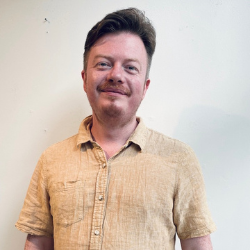
Alistair Dixon’s entry into the music world couldn’t have had a more inauspicious start. Although a music scholar at Millfield School in Somerset, where he studied violin, piano and organ, he became a student of electronics at the University of Liverpool. “Despite reading a science, I managed to keep up my interest in music, however, and carried on studying the organ with Ian Tracey and Noel Rawsthorne at the Anglican Cathedral. That was a wonderful experience and got me into the sphere of church music fully.” On graduating, he moved to Nottingham where he joined a choir that provided him with ample experience of earlier and earlier music: “I regressed through the centuries and ended up settling myself squarely in the sixteenth. The first early music I heard, the Tallis Scholars’ recording of Mundy and Allegri, impressed me but it didn’t do much to sell the genre to me. My conversion was a very gradual process and it took a long time before I was at the point of wanting to perform it.” In fact, the calling came about when he was asked to direct a local amateur choir, Renaissance Voices, which had been formed purely to perform sixteenth- and early seventeenth-century music.
In 1991 he moved to London and, although not actively looking for work away from his chosen career, found himself in increasing demand as a singer. “Eventually, I felt that I had more time to devote to music, however, and arranged a rehearsal at my home with a few singer friends and worked towards putting on our first concert. The concert was pretty good, but I was not altogether happy with the blend and started to experiment by bringing in different singers to try to create my ideal corporate sound.” After four or five concerts, and being pleased with the overall sound his choir was creating, he felt it was time to make his first disc. “The idea had been germinating for quite a while, but it became evident that if we went to any of the recording companies we would be turned away because we were such an unknown quantity; we would probably have had to pay for the recording ourselves, lose copyright to the company and generally lose out in a big way. “I felt that there must be many other artists out there who felt the same way, and wondered if there was a way in which a label could be created that made artists stakeholders in the company.” The idea of Signum was born. Alistair made three discs with his choir and started looking around to see if other musicians were interested in making recordings as well. “Now we have eleven artists on the label, all of whom are operating within our philosophy of sharing profits. There are all sorts of expenses involved in making a recording, so we added up all of the costs and worked out that if the artist bore sixty percent of them, with us providing the remaining forty, then it would only be right that the artist receives sixty percent of the profits. So, whatever the proportion the artist decides on, that is the amount they will receive in profits. Although it might not be the usual way of doing things, the artists love it.” |
|||||||||||||||||||
|
Problems? Comments? Suggestions? Contact Us.
Site coded by passive. Copyright © Bridgewater Multimedia 2001. |
|||||||||||||||||||