|
||||||||||||||||||||||||||||||||||||||||||||
Were it not for William Walton, the Sitwell name might easily have faded with time into relative obscurity; the pronounced streak of eccentricity that pervaded their lives (to the same extent that it invaded their literature) is often the cause of debate amongst scholars viz. whether the works of siblings Edith, Osbert and Sacheverell were anything more than the product of dilettante lunatics, whose scribblings have no place alongside works of true twentieth-century greats such as Siegfried Sassoon, Peter Porter or Philip Larkin, or whether they were, in fact, true geniuses. Certainly, something in Edith's writing in the Façade collection is captivating, but away from Walton's settings,
somehow loses its impact. And whether this is Walton's work at its best is also open to debate. Although demonstrating his typically colourful flair for orchestration and aptitude for melodic invention, its flamboyance often hides the fact that its slight, quirky nature is not representative of the Walton of Belshazzar's Feast, the Violin Concerto or, for that matter, relatively lightweight works such as Portsmouth Point.
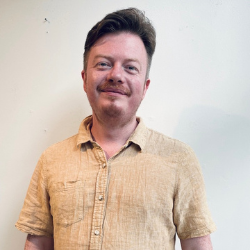
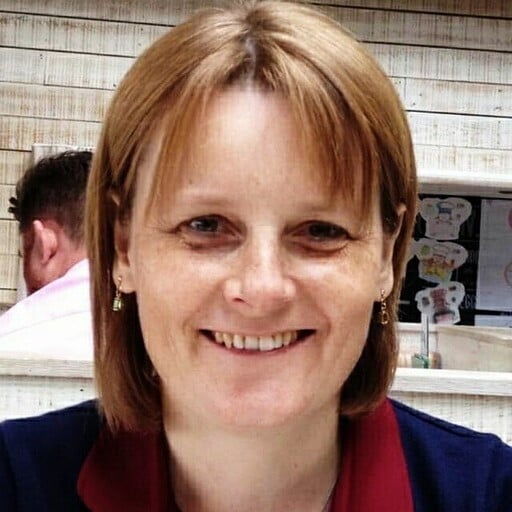
Despite this, Façade has remained popular throughout the three-quarters of a century since its first performances. Decca's 1930 release of eleven numbers, with Edith Sitwell and Constant Lambert under Walton's baton, perhaps remains the 'definitive' version: Lambert's innocence of speech contrasts well with Sitwell's more groomed approach, something that is sadly lacking from either this, or Chandos' 1990 release featuring Richard Baker and Susana Walton (City of London Sinfornia/Hickox/CHAN8669). That said, Bron and Stilgoe do provide well-conceived renditions: both are linked inextricably with satire as performers and writers, and their combined experiences work well in a tableau of this nature. One does feel that Stilgoe overworks his role somewhat and a more detached, discrete performance is perhaps more in keeping with the at-arm's-length reserve Walton seems to require from his reciter. However, his variety of approach and humour certainly help to elaborate Sitwell's texts and work well with a flamboyant performance from The Nash Ensemble. Bron is superb; she captures Sitwell's eccentricities (whilst remaining discreetly individual), combining a kaleidoscope of accents and colours – compare, for example, the vitality of 'Something Lies beyond the Scene', with 'By the Lake' – with her innate skill as an actor. Both are articulate – every word, rhythm, nuance and inflexion is clearly defined and carefully delivered. The Nash Ensemble under the baton of David Lloyd-Jones provides a tight and ecstatically-exciting performance of Walton's exceedingly difficult score. Occasionally, however, the clarity of both Stilgoe and Bron becomes lost in a slightly exuberant, over-zealous texture. Speeds are well-judged, intonation almost perfect and balance only occasionally detracts from the narrative. By far the most important release of this work since Walton's own recordings, this is a remarkable performance and the inclusion of all extant Façade material makes it an extremely attractive buy for Walton aficionados. The Lambert I could have done without.
|
||||||||||||||||||||||||||||||||||||||||||||
|
Problems? Comments? Suggestions? Contact Us.
Site coded by passive. Copyright © Bridgewater Multimedia 2001. |
||||||||||||||||||||||||||||||||||||||||||||